How Solar Works
Solar panels create DC power from sunlight. The inverter converts it to AC power your home or business can use. A hybrid system can also charge batteries for selected backup loads.
Resources
Use this page to understand your bill, choose the right system and battery approach, learn about net metering, and prepare your monthly kWh before talking with K&J Solar.
Use these quick guides to make better decisions before comparing prices or choosing a package.
Solar panels create DC power from sunlight. The inverter converts it to AC power your home or business can use. A hybrid system can also charge batteries for selected backup loads.
Your bill includes kWh usage, rate per kWh, generation, distribution, taxes, and other charges. Solar can reduce energy use from the grid, but some utility charges may remain. Utility rates change monthly, so use the rate printed on your latest bill.
See Meralco rate advisoriesBattery size depends on what you want to run during outages. A 5kWh battery can support basic backup needs, while larger batteries are better for longer backup or heavier loads.
Net metering lets eligible solar customers export excess power to the grid for credits. Requirements, inspections, and approval steps depend on the utility and final system design.
Solar still produces energy on cloudy days, but less than during full sun. Batteries are optional for grid-tied savings, but important if backup power is one of your goals.
Keep panels clear of heavy dirt, watch the monitoring app, and request inspection after strong storms if you notice changes in production or visible mounting concerns.
The right setup depends on whether your main goal is lower bills, backup power, or power where grid service is limited.
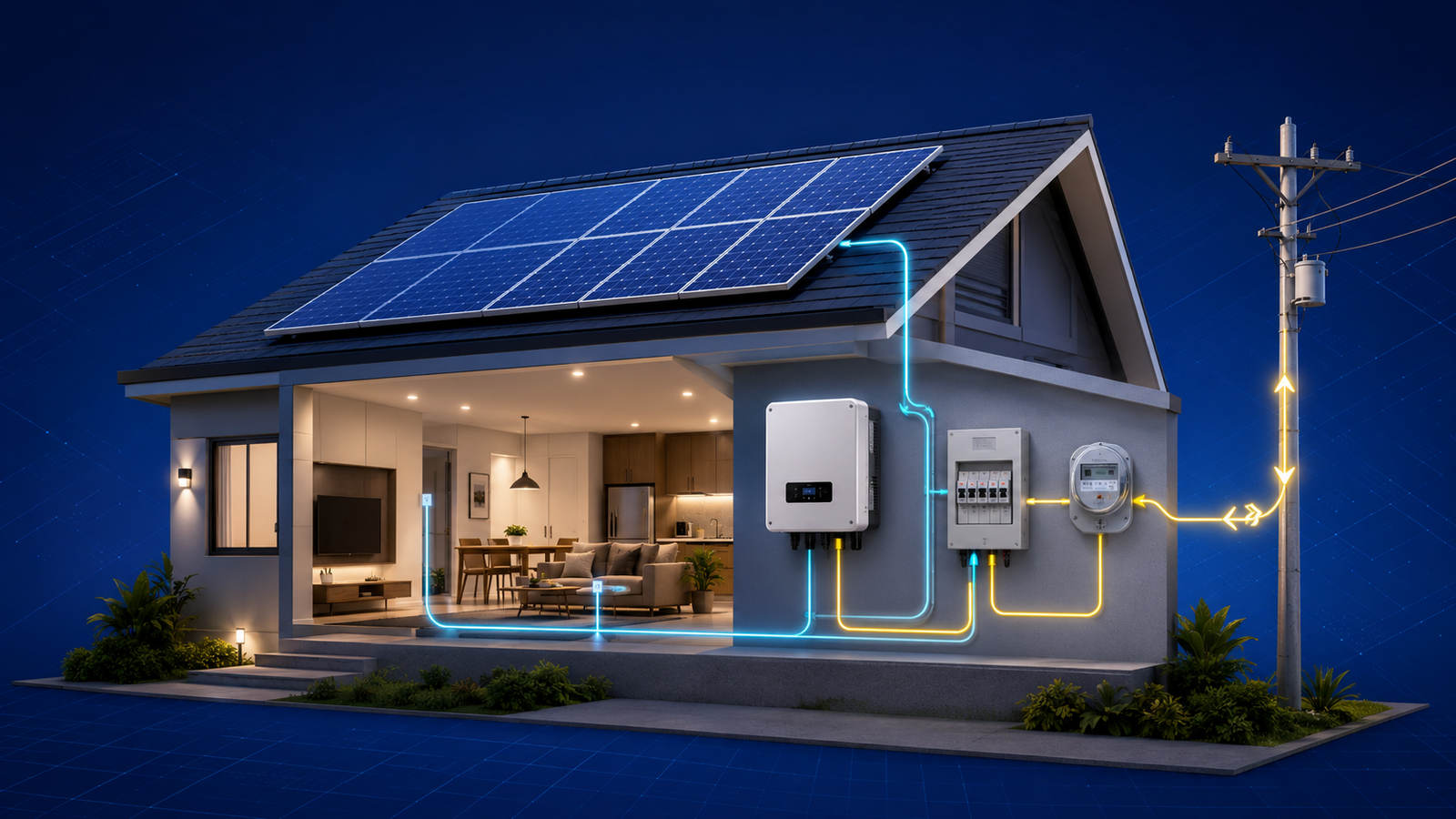
Lower bills
Best when grid power is available and savings are the priority. It normally shuts down during outages for safety.
Panels → inverter → home and utility grid
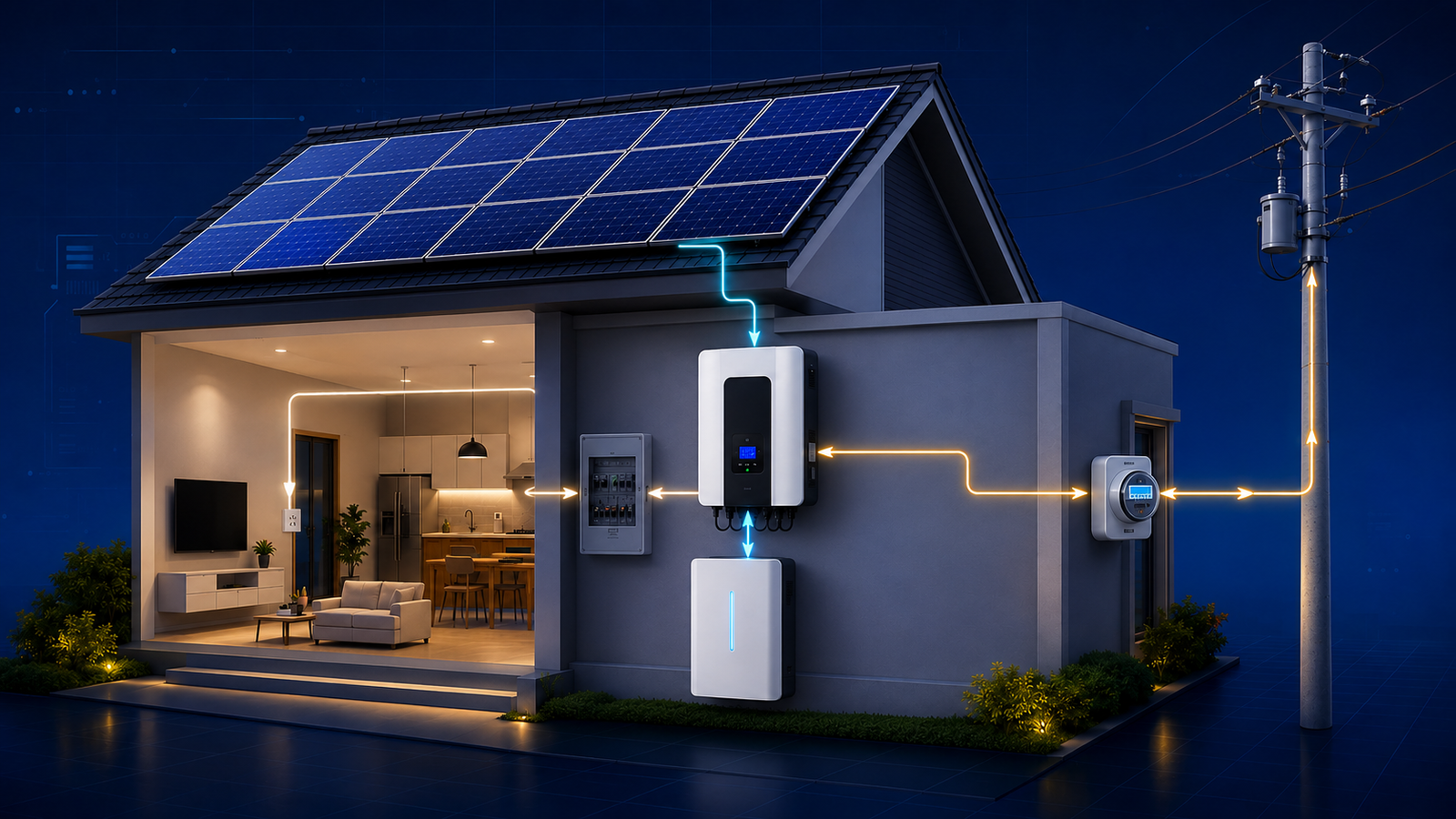
Savings plus backup
Best when you want lower bills and backup for selected appliances. Battery size follows your backup priorities.
Panels → inverter ↔ battery → selected loads
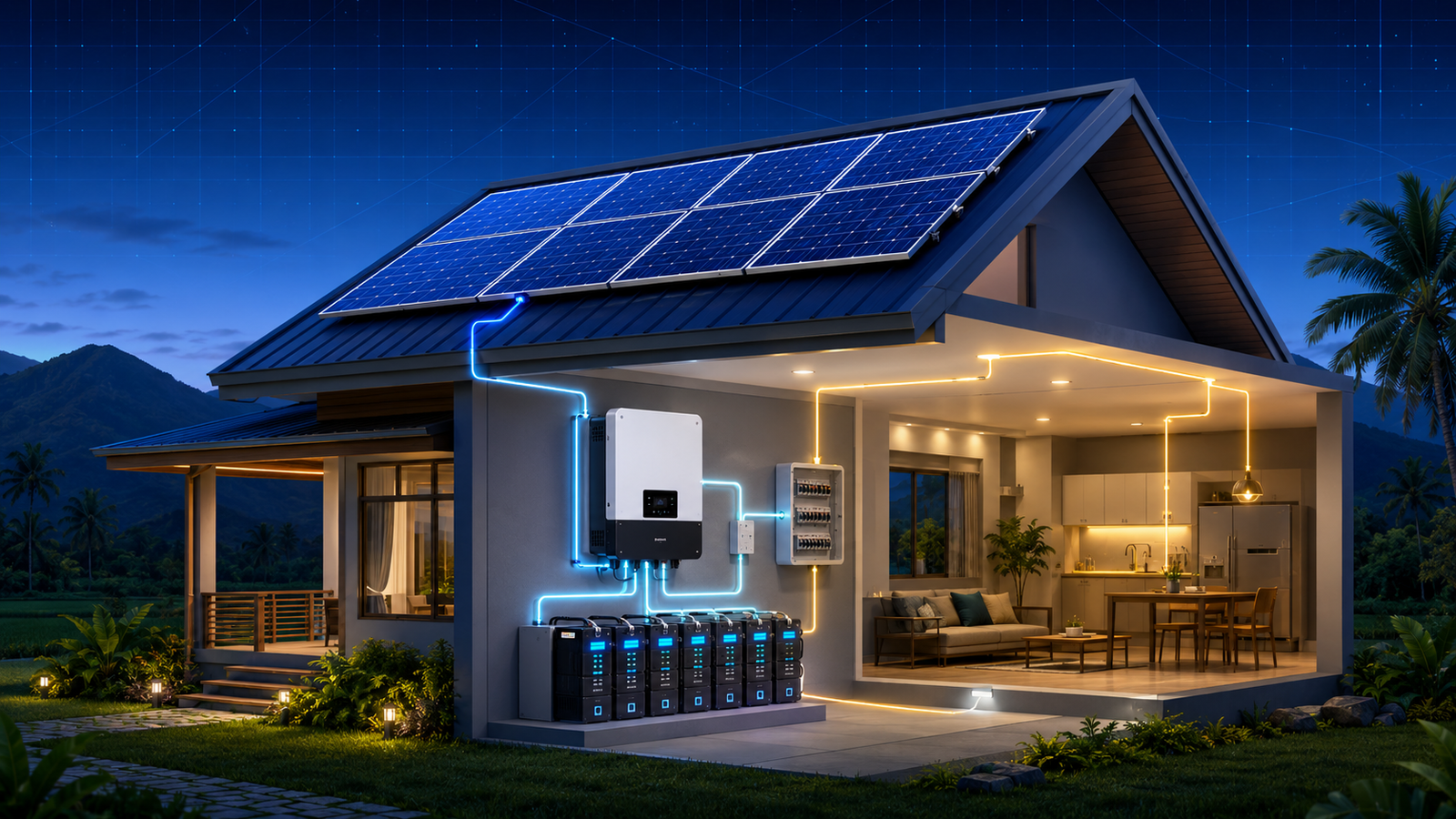
Independent power
Best where grid service is limited. It requires careful load calculation, more battery planning, and realistic appliance expectations.
Solar + battery + inverter, no utility grid
A good proposal should be clear about equipment, installation scope, backup expectations, and support after turnover.
Panel quantity, wattage, brand option, roof layout, and production estimate.
Grid-tied or hybrid inverter, battery capacity, backup limits, and monitoring option.
Mounting system, wiring route, protection devices, labor, testing, and turnover.
Warranty guidance, maintenance reminders, monitoring help, and support contacts.
Battery backup should be planned around selected loads. Aircon, pumps, heaters, and large appliances need special review.
Basic backup
Good for lights, Wi-Fi, phone charging, fans, CCTV, and selected small outlets.
Comfort backup
Can support more outlets and longer runtime for essentials like refrigerator, fans, lights, and internet.
Larger backup goals
Better for longer outages or heavier selected loads, but final design must review appliance wattage.
These details help K&J Solar avoid guesswork and recommend a system that matches your real usage, roof, and budget.
Monthly kWh, utility rate, and other charges help estimate system size and realistic savings.
City, roof type, available space, and shading help determine layout and installation approach.
Tell us which appliances matter during outages if you want a hybrid solar and battery setup.
Share your target budget, preferred schedule, and whether installment options matter to you.
Solar warranties depend on the actual panels, inverter, battery, mounting materials, and supplier terms. K&J Solar will explain these details in the quote so you can compare options clearly.
Panel, inverter, battery, and accessory warranties vary by brand and model. Ask for the exact terms in writing.
Installation support should cover workmanship-related concerns based on the agreed scope and site conditions.
We can guide you on cleaning, inspections, monitoring, and when to request troubleshooting.
K&J package planning references are available on the Services page. Final cost depends on system size, battery capacity, equipment brand, roof condition, wiring distance, location, and installation scope.
Your monthly kWh consumption, roof photos, location, average bill, and whether you want battery backup are the most useful starting details.
Yes, solar panels can still produce power on cloudy days, but output is usually lower than during strong sunlight. This is one reason estimates use location, sunlight hours, and performance assumptions.
Grid-tied solar normally shuts off during outages for safety. If backup power is important, ask for a hybrid system with battery storage.
That depends on battery size and the selected backup loads. Common backup priorities include lights, Wi-Fi, fans, refrigerator, CCTV, and selected outlets. Heavy appliances need careful review.
Yes. K&J Solar can quote solar street lights for driveways, private roads, barangay areas, parking lots, farms, and business outdoor spaces. A site check helps confirm pole height, spacing, brightness, battery capacity, and installation needs.
Yes. You can request fiber optic cable by cable type, length, connector needs, and quantity. Include any project details, photos, or specs in the quote request so K&J Solar can respond more accurately.
K&J Solar can guide you through the net metering requirements and help explain what documents and inspections may be needed.
Many residential installations can be completed in a few days after design, materials, and scheduling are finalized. Bigger systems or permitting steps can take longer.